
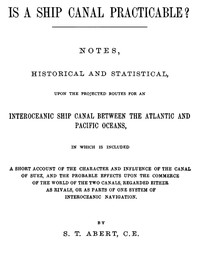
Is a Ship Canal Practicable? by S. T. Abert
Published in 1882, Is a Ship Canal Practicable? is a technical report that reads like a quiet act of rebellion. The U.S. government, caught up in a wave of national ambition, wanted a massive ship canal to connect the Great Lakes directly to the Atlantic. They sent Lieutenant Silvanus Thayer Abert to survey the route and give them the green light.
The Story
Abert didn't give them what they wanted. Instead of a cheerleader's report, he delivered a meticulous, 130-page reality check. He walked the proposed route, calculated the staggering costs, and pointed out the immense engineering hurdles. He argued that the project, as dreamed, wasn't financially sensible. The existing railroads and smaller canals, he suggested, already did the job well enough. His conclusion wasn't a flat 'no,' but a heavily qualified 'it's possible, but wildly impractical.' He essentially told the booming, optimistic America of the Gilded Age to slow down and think. The real plot is the tension between one man's careful analysis and the powerful forces of progress and politics pushing for a grand, legacy-defining monument.
Why You Should Read It
You should read this because it's a masterclass in quiet integrity. Abert isn't a flashy character. His voice is dry, technical, and precise. But that's what makes it so compelling. In an age of hype, he was a voice of reason. Reading his measured arguments against the backdrop of what we know happened—the canal wasn't built—is fascinating. It shows that sometimes, the most courageous act is to simply present the facts, even when nobody wants to hear them. It's also a surprisingly accessible look at 19th-century engineering and economic thinking. You don't need a degree to follow his logic; you just need to appreciate a well-built argument.
Final Verdict
This is a niche gem, but a brilliant one. It's perfect for history buffs who love primary sources, for anyone interested in the roots of American infrastructure, or for readers who enjoy stories about unsung experts. If you liked The Devil in the White City for its Gilded Age setting, you'll appreciate the grounded, bureaucratic counterpoint Abert provides. It's not a long book, and its directness is its strength. Think of it as the anti-thesis to the era's grand speeches and boosterism—a necessary dose of cold water, carefully documented and bound in government paper.
Mason Johnson
1 year agoMy professor recommended this, and I see why.








Ethan Hernandez
1 year agoPerfect.