
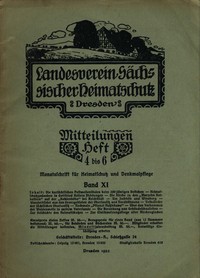
Landesverein Sächsischer Heimatschutz — Mitteilungen Band XI, Heft 4-6…
Let's be clear from the start: this is not a novel. There's no main character, no plot twist on page 200. 'Landesverein Sächsischer Heimatschutz — Mitteilungen Band XI, Heft 4-6…' is exactly what it claims to be—a bound volume of quarterly bulletins from a Saxon heritage protection society, published nearly a century ago. The author is listed as 'Unknown' because it's a compilation of work from many contributors.
The Story
The 'story' is the story of a place—Saxony, a region in Germany—at a specific moment in time. Through a series of short articles, you get snapshots. One piece might detail the correct way to restore a specific type of farmhouse timber frame. Another is a catalog of disappearing folk songs from a particular valley. Another argues passionately against the demolition of a old mill to make way for a new road. There are lists of protected buildings, reports on society meetings, and obituaries for local historians. It feels scattered at first, but a clear picture forms. This was a group of people racing against the modernizing forces of the 1920s and 30s, trying to document and defend a way of life they saw vanishing before their eyes.
Why You Should Read It
I'll be honest, I picked this up as a curiosity. I stayed for the profound sense of place and quiet urgency. Reading it feels like listening in on a conversation from another time. You're not getting a polished history book narrative; you're getting the raw materials. The passion of these writers bleeds through. Their love for a specific carved doorway or a nearly forgotten holiday tradition is palpable. It made me look at my own surroundings differently. What in my town would a preservationist from 1928 fight to save? What stories are we letting disappear? It's a slow, thoughtful read that turns you into a detective, connecting the dots between architectural notes, folk tales, and social history.
Final Verdict
This is a book for a very specific, patient reader. It's perfect for history buffs who prefer primary sources over summaries, or for anyone fascinated by how cultural identity is built and preserved. If you love local history, architecture, or folklore, you'll find gems here. It's also great for writers or world-builders looking for authentic, granular detail about a time and place. But if you need a driving narrative or clear answers, this isn't it. Think of it less as a book to read cover-to-cover, and more as a museum archive you can wander through, discovering small, forgotten wonders on every page.




Mary Allen
1 year agoSurprisingly enough, the flow of the text seems very fluid. One of the best books I've read this year.