
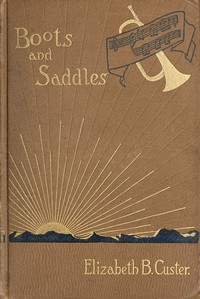
"Boots and Saddles"; Or, Life in Dakota with General Custer by Custer
Most people know General George Armstrong Custer from one moment: his final, disastrous battle at the Little Bighorn. 'Boots and Saddles' gives us everything that came before. Written by his wife, Elizabeth 'Libbie' Custer, it's a firsthand account of their life together at remote army posts in Dakota Territory during the early 1870s.
The Story
This isn't a plot-driven book with a clear villain and hero. Instead, Libbie paints a vivid picture of daily existence on the frontier. She describes the stark beauty and immense challenges of the plains—the scorching summers, the howling blizzards that could bury a house, and the ever-present tension with the Native tribes whose land the army was there to control. We see Custer not as a general on a podium, but as a man who adored his horses and hunting dogs, who threw lively parties for his officers, and who faced constant bureaucratic headaches from Washington. The narrative is filled with small, telling details: the struggle to get fresh food, the fear during alarms, the deep bonds (and occasional dramas) within the regiment's family. The shadow of what's to come hangs over it all, making the ordinary moments feel precious.
Why You Should Read It
You should read this because it completely humanizes a figure who's been frozen in history. Libbie was fiercely loyal, and her portrait is glowing, but even through her admiration, a complex man emerges. We see his incredible energy, his love for his troops, and his genuine affection for Libbie. But we also get glimpses of his recklessness, his vanity, and the relentless ambition that drove him. It's this uncensored, domestic view that's so valuable. The book is also a powerful document of what it meant to be a military wife in that era—a life of constant movement, shared danger, and unwavering support, told with wit, warmth, and remarkable resilience.
Final Verdict
Perfect for anyone who loves memoir, American history, or simply a great personal story. If you only know Custer from textbooks and paintings, this book will surprise you. It's for readers who want to look beyond the dates and battles to understand the people who lived them. Think of it as sitting down with Libbie Custer over a cup of coffee as she tells you about her extraordinary, ordinary life with her famous husband. Just be prepared—it might make the history you thought you knew feel a lot more complicated, and a lot more real.

Lucas Lopez
9 months agoLoved it.