
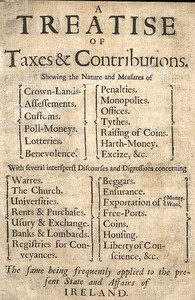
A Treatise of Taxes and Contributions by Sir William Petty
So, what's this old book actually about? Let's set the scene. It's 1662. England's King Charles II has just been restored to the throne after a decade of civil war and rule by Parliament. The country is broke, physically damaged, and deeply divided. The old ways of funding the government—a confusing patchwork of feudal dues, customs, and levies—are clearly broken.
The Story
Petty doesn't tell a story with characters, but he paints a vivid picture of a nation's struggle. He methodically goes through every way the government could get money: land taxes, poll taxes, excise taxes on goods, and more. For each one, he asks a simple, powerful question: What happens to the people paying this? Will it make them work less? Will it hurt trade? Will it just be passed on to someone else? He's obsessed with data and measurement (he pioneered the first serious surveys of Ireland), trying to replace guesswork with facts. The 'plot' is his journey to find a system that is fair, easy to collect, and, most importantly, helps the kingdom grow stronger instead of crushing it.
Why You Should Read It
You should read it because it’s the birth certificate of practical economics. Petty's voice is direct, clever, and often impatient with nonsense. He’s not writing for academics; he's trying to solve a real, urgent problem. His core idea—that a nation's wealth comes from the labor and ingenuity of its people, not just piles of gold—was revolutionary. When he talks about investing tax money in infrastructure, education, and care for the poor to boost the overall economy, it sounds incredibly modern. It’s thrilling to see these concepts articulated for the first time, wrapped in the urgent concerns of post-war reconstruction. It strips away centuries of complexity and gets right to the heart of what taxes are for.
Final Verdict
This book is perfect for anyone curious about where our modern economic world came from. It's a must for history buffs who want to understand the Restoration period beyond kings and court drama. It's also great for policy wonks, economics students, or anyone who has ever grumbled about their tax bill and wondered if there's a better way. It’s not a light read—the language is 17th-century—but the ideas are so clear and forceful that you can easily look past the old-fashioned prose. Think of it as a foundational text, a conversation with one of history's sharpest minds about the perennial challenge of paying for the society we want to live in.


Ava Walker
1 month agoI started reading out of curiosity and the clarity of the writing makes this accessible. Highly recommended.