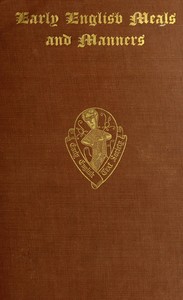
Early English Meals and Manners by Frederick James Furnivall
Okay, let's clear something up right away: Early English Meals and Manners isn't a storybook. It's an edited collection of primary source documents, mostly from the 14th and 15th centuries. Frederick James Furnivall, the editor, was a scholar who basically went digging through old manuscripts to find anything about food and social conduct. What he compiled is a raw, unfiltered look at medieval life.
The Story
There's no traditional plot. Instead, the 'story' is the everyday reality of medieval England, told through its own rules and recipes. You get instructional poems that teach young boys how to behave at a lord's table—don't spit, don't scratch, don't blow your nose into the tablecloth. You find menus for grand feasts that include things like swan and 'blank mang' (a kind of almond milk stew). There are also household accounts, shopping lists, and notes on how to properly serve wine. It all builds a picture of a society where manners were a public performance of your status, and a meal was a chaotic, sensory-overload event.
Why You Should Read It
This book completely changed how I imagine the past. History often feels polished and distant, but this stuff is immediate and human. Reading a stern warning not to put half-eaten food back in the shared dish makes those people feel real. You see their worries about looking uncouth, their pride in a well-stocked pantry, and their creative (sometimes questionable) solutions for preserving food. It's the ultimate 'slice of life' from 600 years ago. The details are what get you—the specific order for washing hands, the types of bread assigned to different social ranks, the sheer amount of spice they used. It turns the vague idea of 'the Middle Ages' into something you can almost smell and taste (for better or worse).
Final Verdict
This is a perfect pick for anyone with a deep curiosity about social history who doesn't mind a book that's more of a museum exhibit than a narrative. It's for the reader who loves those weird, specific facts that bring a era to life. If you're a historical fiction writer looking for authentic detail, a food history nerd, or just someone who thinks the past is fascinating because of the ordinary people, not just the extraordinary events, you'll find treasure here. Be warned: it's a bit academic in layout, but the content itself is wildly entertaining. You won't look at a dinner table the same way again.