
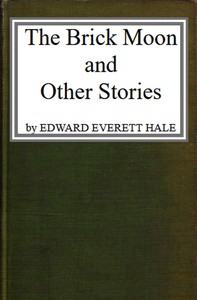
The Brick Moon, and Other Stories by Edward Everett Hale
Let's set the scene: it's the late 1800s. The telephone is brand new, and the idea of human flight is still a dream. Yet, in a magazine called The Atlantic Monthly, Edward Everett Hale publishes a story about building a navigational satellite. Not a metal machine, but a giant, habitable sphere made of brick, launched into orbit by gigantic flywheels. That's 'The Brick Moon.' The plot follows a group of friends and engineers who dream up this project to help ships find their longitude at sea. But in a moment of brilliant chaos, their test satellite—unbeknownst to them, occupied by a few workers and their families—gets accidentally sent into space. The rest of the story is told through fragmentary observations from Earth as the castaways on the Brick Moon figure out how to survive and even thrive in their new, permanent home.
Why You Should Read It
This isn't about laser battles or warp speed. The magic here is in the quiet, logical problem-solving. Hale thinks through the details: air, water, food, and even society on this tiny world. You can feel the author's genuine excitement about possibility. The characters are driven by a sincere desire to do good, to solve a real human problem (dangerous sea voyages), and their creation takes on a life of its own. Reading it feels like uncovering a blueprint for a future that could have been imagined. It’s hopeful, a little bit clunky in that charming 19th-century way, and it makes you appreciate how far our own dreams of space have come. It’s a story about community and adaptation in the most extreme circumstances imaginable at the time.
Final Verdict
This collection is perfect for curious readers who love the history of ideas, especially science fiction and utopian literature. If you enjoy Jules Verne's practical adventures or the speculative social experiments of early sci-fi, you'll find a kindred spirit in Hale. It’s also a great pick for anyone who likes to see how old stories accidentally predict the future. The other stories in the book offer more of Hale's thoughtful, socially-conscious style. Just be ready for a slower, more philosophical pace than modern fiction. Think of it less as a thrill-ride and more as a fascinating conversation with a very clever, optimistic mind from the past.




Ashley Garcia
1 year agoTo be perfectly clear, the content flows smoothly from one chapter to the next. One of the best books I've read this year.