
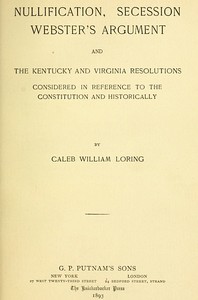
Nullification, Secession, Webster's Argument, and the Kentucky and Virginia…
Let's set the scene. It's the late 1790s, and America is a brand-new experiment. The Federalists are in power, and they've passed the Alien and Sedition Acts—laws that many people, especially Thomas Jefferson and James Madison, saw as a huge overreach and a threat to free speech. So, what do you do when you think the federal government has gone too far? Jefferson and Madison (writing secretly) drafted the Kentucky and Virginia Resolutions. These papers argued that states had the right to 'nullify,' or invalidate, federal laws they deemed unconstitutional. It was a radical idea that planted a seed.
The Story
The book isn't a novel with a plot, but the story it tells is a gripping political drama. Caleb Loring lays out the core conflict by presenting the key documents. First, you get the full, powerful text of Daniel Webster's 1830 Senate speech, where he famously defended the Union as a creation of the whole people, not a compact of sovereign states. His "Liberty and Union, now and forever, one and inseparable!" line is the climax. Then, Loring shows you the opposing view: the actual texts of the Kentucky and Virginia Resolutions. Reading them, you see the blueprint for states' rights arguments that would be used for decades. The book is the stage, and these documents are the characters in a foundational debate.
Why You Should Read It
This book connects dots. It takes abstract concepts like nullification and secession and shows you where they started—not in 1860, but 60 years earlier. You see the philosophical battle lines being drawn. Webster's argument feels prophetic, a desperate plea to avoid a path he saw leading to disaster. The Resolutions feel like a dangerous, but perhaps necessary, check on power. Loring doesn't just drop these texts in your lap; he provides context that helps you understand why people were so passionate. It makes history feel immediate, like you're reading the breaking news of a constitutional crisis.
Final Verdict
Perfect for history buffs who want to go beyond the headlines of wars and presidencies to understand the ideas that fueled them. It's also great for anyone interested in American politics today, as these old debates about federal power versus states' rights still echo. This isn't a light read—you have to be ready to engage with some 19th-century prose—but it's incredibly rewarding. Think of it as the essential backstory to the Civil War, a must-read for understanding the 'why' behind the country's greatest fracture.
Ava Flores
1 year agoBeautifully written.

Mark Flores
3 months agoI stumbled upon this title and it creates a vivid world that you simply do not want to leave. Absolutely essential reading.